Halloween Decorations to Reconsider When You Live With Curious Pets
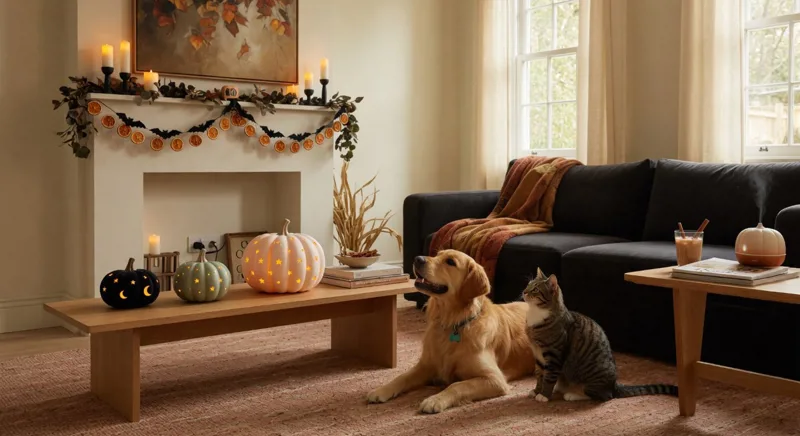
Halloween decorations can make your home feel wonderfully spooky—but some are risky for curious dogs, cats, birds, and small animals. Before you hang fake cobwebs or light a jack-o’-lantern, review these Halloween decorations to reconsider when you live with curious pets.
1. Lit Candles and Traditional Jack-o’-Lanterns
Nothing says Halloween quite like a glowing pumpkin. Unfortunately, pets can knock over a candle, burn themselves, or start a house fire. Curious kittens and energetic puppies are especially likely to investigate a flickering flame.
Even a candle placed on a stable table may become dangerous if a pet jumps nearby or bumps the furniture. Battery-operated LED candles are a safer alternative, particularly when they are placed inside a sturdy pumpkin that cannot be easily tipped over.
2. Loose Electrical Cords and String Lights
Decorative lights are attractive to pets that like to chew, especially young dogs, kittens, rabbits, and other small animals. A damaged cord can cause mouth injuries or electrical shock, while loose wires can create a tripping or tangling hazard.
For safer holiday decorating:
- Route cords behind furniture or along walls.
- Use cord covers where wiring must remain exposed.
- Secure light strands so pets cannot pull them down.
- Inspect cords for fraying before plugging them in.
- Unplug decorations when pets are unsupervised.
Keeping wires out of paws’ reach is a key part of Halloween pet safety, especially in homes with persistent chewers.[1][2]
3. Fake Cobwebs, Tinsel, and Hanging Garlands
Fake spiderwebs look harmless, but loose strands can wrap around legs, tails, or necks. If swallowed, string-like decorations may become dangerous foreign bodies that require urgent veterinary care. Tinsel, ribbons, and thin garlands pose similar risks—particularly for cats, who may bat at and chew dangling objects.
Skip low-hanging decorations in hallways, near staircases, and around scratching posts. If you use cobwebs outdoors, keep them away from areas where pets or wildlife could become tangled.
4. Small Skeletons, Eyeballs, and Costume Accessories
Small plastic skulls, rubber eyeballs, miniature pumpkins, and detachable decoration parts can look like toys. A pet that chews or swallows one may choke or develop an intestinal blockage. Plastic pieces may also break into sharp edges.
Place small Halloween décor on high shelves or inside enclosed displays. Avoid decorations with easily detached parts, and regularly scan the floor for fallen pieces after decorating or hosting guests.
5. Glow Sticks and Glow Jewelry
Glow sticks are popular for parties and trick-or-treating, but pets may bite through the plastic casing. The liquid usually tastes extremely bitter and can cause drooling, pawing at the mouth, or stomach upset. The plastic casing itself can create a choking or obstruction risk.[1][3]
Keep glow necklaces, bracelets, and novelty toys in a closed container. If a pet chews one, prevent further access, rinse any liquid from the fur or skin, and contact a veterinarian for advice if symptoms continue.
6. Fake Blood, Scented Potpourri, and Decorative Chemicals
Fake blood, fog-machine fluids, scented sprays, and potpourri can contain ingredients that irritate a pet’s mouth, stomach, skin, or airways. Birds can be particularly sensitive to airborne fragrances and scented products.
Read product labels before bringing novelty décor into your home. Avoid placing liquids where pets can lick them, and keep sprays, adhesives, and decorating supplies in a secured cabinet. Good ventilation also matters when using any product that produces fumes.
7. Dry Ice and Fog Effects
Dry ice creates dramatic Halloween fog, but it can cause serious cold burns if touched or consumed. Pets may be drawn to the mist, especially if it is used in a bowl or near the floor.
It is best to avoid dry ice in accessible areas. Never let a pet investigate fog machines, dry ice containers, or unknown liquids without supervision. For a similar visual effect, choose pet-free displays that remain physically separated from animals.
8. Loud, Motion-Activated, or Flashing Decorations
Motion-activated ghosts, screaming props, strobe lights, and sudden sound effects may frighten even confident pets. Repeated startling can lead to hiding, panic, destructive behavior, or attempts to escape.
Introduce new decorations gradually before Halloween night. Keep particularly noisy items away from sleeping areas, and turn them off if your pet shows signs of stress, such as trembling, panting, pacing, hiding, or excessive vocalizing.
9. Decorations Near Doors and Windows
Halloween brings frequent doorbells, strangers, and open doors—an escape risk for dogs and cats. A nervous pet may bolt when trick-or-treaters arrive, even if the animal normally stays close.
Create a quiet, secure room before the evening begins. Add familiar bedding, water, and a favorite toy, then keep the door closed while visitors come and go. Make sure identification tags and microchip details are current, too.
Safer Halloween Decorating Ideas for Pet Owners
- Use lightweight, unbreakable decorations secured above your pet’s reach.
- Choose LED candles instead of open flames.
- Use solid decorative pumpkins rather than fragile ceramic or glass pieces.
- Keep displays behind closed doors, gates, or transparent barriers.
- Leave chewable, dangling, and string-like decorations out of pet areas.
- Set up a pet-safe room before guests arrive.
What to Do If Your Pet Eats a Decoration
Remove any remaining material from reach and contact your veterinarian promptly. Do not induce vomiting unless a veterinary professional specifically instructs you to do so. Watch for vomiting, diarrhea, excessive drooling, lethargy, abdominal discomfort, difficulty breathing, or trouble passing stool.
Save the product packaging or take a photograph of the decoration. Details about the material, approximate amount, and time of exposure can help a veterinarian determine the next step. Poison-control guidance may also be appropriate for suspected toxic exposures.[2][4]
Final Thoughts
The best Halloween decorations are the ones your pets can enjoy safely from a distance. By reconsidering open flames, exposed cords, small plastic pieces, fake cobwebs, glow products, and startling effects, you can keep the spooky atmosphere while reducing preventable injuries, choking hazards, and emergency veterinary visits.
References
You May Also Like
 Entertainment
The Ultimate Test of Your 2000s Pop Culture Memory
 Entertainment
Which Cozy Weekend Plan Matches Your Personality?
 Entertainment
Can You Identify These Movies From One Object?