Things Every Chaotic Kitchen Somehow Contains
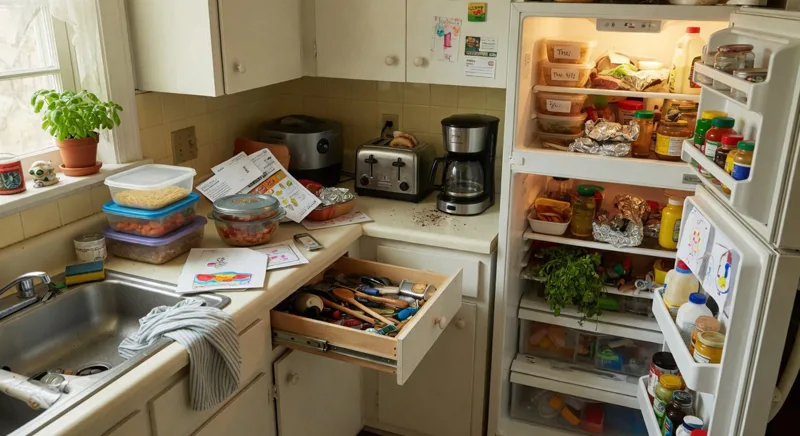
There is a special kind of kitchen chaos that feels universal: one drawer refuses to close, the counter is covered in “temporary” items, and nobody knows what lives at the back of the refrigerator. These are the things every chaotic kitchen somehow contains—and the small habits that make them manageable.
The Mystery Drawer of Kitchen Tools
Every busy kitchen seems to have a drawer filled with objects that are useful, confusing, or both. Inside, you may find takeout chopsticks, loose measuring spoons, bottle openers, corn holders, rubber bands, and a utensil nobody recognizes.
The problem is not owning too many kitchen gadgets. It is storing them without categories. A simple drawer organizer can turn this daily frustration into a workable system. Group everyday utensils together, move rarely used tools elsewhere, and place duplicates in a donation box.
Reusable Containers Without Their Lids
Plastic food containers are essential for leftovers, meal prep, and pantry organization. Unfortunately, chaotic kitchens often contain a mountain of containers with no matching lids—and lids that belong to containers long gone.
Try this quick reset:
- Remove every container and lid from the cabinet.
- Match each lid to its container.
- Recycle or discard cracked, warped, or unusable pieces.
- Store containers inside one another and keep lids vertically nearby.
Clear containers make it easier to see what you have, while uniform food storage containers save valuable cabinet space.
The Overcrowded Refrigerator
A chaotic refrigerator commonly contains forgotten leftovers, half-used sauces, wilting produce, and several jars of the same condiment. When shelves become crowded, food disappears from view and expiration dates are easy to miss.
Keep the refrigerator at or below 40°F (4°C), and keep the freezer at 0°F (-18°C), as recommended by the FDA.[1] Avoid packing it so tightly that cold air cannot circulate.[1]
Designate one shelf for leftovers and use a simple labeling system with the food name and date. Once a week, scan the refrigerator before grocery shopping. This prevents duplicate purchases and makes meal planning much easier.
The Pantry Items Everyone Forgot About
Behind the cereal and pasta, most disorganized pantries hide a collection of forgotten ingredients:
- Three partially used bags of rice
- A can with no label
- Spices that lost their aroma years ago
- Several types of flour
- A specialty ingredient purchased for one recipe
- Snacks nobody remembers buying
Organize pantry staples by type: grains, canned goods, baking supplies, snacks, and cooking oils. Place older items toward the front and newer purchases behind them. This first-in, first-out approach reduces food waste and makes the pantry easier to navigate.
The Countertop Appliance Graveyard
Chaotic kitchens often have more appliances than available counter space. The blender, toaster, air fryer, coffee maker, slow cooker, and stand mixer compete for room while rarely being used at the same time.
Keep daily-use appliances accessible, but store seasonal or occasional equipment in a cabinet. If an appliance has not been used in a year, ask whether it earns the space it occupies. A clear countertop creates more room for food preparation and makes cleaning faster.
The Dish Towel That Has Seen Everything
A damp dish towel can become one of the most overlooked items in a kitchen. It may wipe hands, dry dishes, clean spills, and touch food-preparation surfaces—all in the same day.
Keep separate towels for drying hands, drying dishes, and cleaning surfaces. Wash kitchen towels frequently, especially after handling raw meat or wiping up spills. The USDA recommends washing utensils, cutting boards, and food-contact surfaces with hot, soapy water after use.[2]
The Sink Full of “Soaking” Dishes
Every chaotic kitchen has a few dishes that have been soaking long enough to become part of the décor. Pots with dried sauce, glasses filled with cloudy water, and a pan waiting for “later” quickly turn the sink into a second storage area.
Instead of soaking everything indefinitely, set a short cleanup timer. Scrape food into the trash, rinse dishes, and wash the most difficult item first. Cleaning the sink at the end gives the entire kitchen an immediate sense of order.
The Sponge Nobody Wants to Replace
That flattened sponge may seem harmless, but old, damp cleaning tools can hold food particles and unpleasant odors. Replace sponges regularly, allow them to dry between uses, and wash reusable cloths frequently.
When cleaning after raw meat or poultry, wash surfaces first with warm, soapy water and then sanitize them according to the product label.[3] Do not forget commonly touched areas such as refrigerator handles, cabinet pulls, faucet handles, and appliance controls.[4]
The “I’ll Deal With It Later” Pile
Mail, grocery receipts, delivery packaging, school papers, keys, and unopened packages often land on the kitchen counter. Because the kitchen is usually the center of the home, it becomes an accidental command center.
Create a small drop zone with a tray, basket, or wall organizer. The goal is not perfection; it is containment. Give every non-kitchen item a temporary home, then clear the area once a day.
A Five-Minute Kitchen Reset
- Put away anything that does not belong in the kitchen.
- Load or wash the dishes.
- Throw away expired food and obvious trash.
- Wipe the main countertop and stove.
- Return frequently used items to their usual places.
This small routine works better than waiting for the kitchen to become overwhelming. A chaotic kitchen does not need a complete renovation or expensive storage system. It needs fewer mystery items, clearer categories, and habits that are easy to repeat.
Conclusion
The things every chaotic kitchen somehow contains are familiar: unmatched containers, crowded counters, forgotten leftovers, overworked towels, and one drawer full of questionable gadgets. Once each category has a home, kitchen organization becomes less about perfection and more about making everyday cooking, cleaning, and food storage feel easier.
References
You May Also Like
 Entertainment
The Ultimate Test of Your 2000s Pop Culture Memory
 Entertainment
Which Cozy Weekend Plan Matches Your Personality?
 Entertainment
Can You Identify These Movies From One Object?