Small Acts of Kindness That Started Big Movements
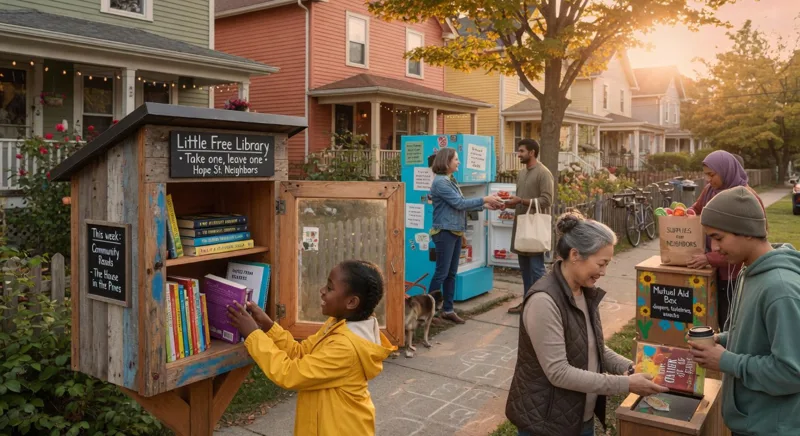
History is full of small acts of kindness that started big movements. A free book, a shared meal, or one person choosing courage can inspire thousands of others. These stories prove that meaningful social change often begins with a simple gesture.
How Small Acts Create Lasting Change
Large movements rarely appear overnight. They usually begin when someone notices a need and responds in a practical, human way. That first action may seem modest, but it can create trust, conversation, and a repeatable example for others to follow.
The most powerful acts of kindness often share three qualities:
- They solve a real problem in an accessible way.
- They invite other people to participate.
- They are easy to repeat in different communities.
From neighborhood sharing initiatives to civil rights campaigns, the pattern is remarkably consistent: one thoughtful action becomes a model, the model becomes a habit, and the habit becomes a movement.
Little Free Libraries: One Tribute That Sparked a Literacy Movement
In 2009, Todd Bol built a small replica of a one-room schoolhouse in Hudson, Wisconsin, using reclaimed wood. He filled it with books as a tribute to his mother, a teacher who loved reading, and placed it outside his home for neighbors to enjoy.[1]
What began as a personal memorial quickly became a community book exchange. Bol built additional boxes, and Rick Brooks of the University of Wisconsin–Madison helped develop the idea into a nonprofit organization. Their goal was to create more than 2,509 small libraries—the number associated with Andrew Carnegie’s public library legacy.[1][2]
The goal was surpassed far earlier than expected. By 2016, more than 50,000 Little Free Libraries had appeared across all 50 U.S. states and 70 countries.[1] The simple “take a book, leave a book” model shows how kindness can support literacy, encourage neighborhood connections, and make knowledge more accessible.
Rosa Parks and the Power of a Courageous Choice
Rosa Parks’ refusal to surrender her bus seat in Montgomery, Alabama, is often described as a single act of resistance. In reality, it reflected years of organizing by Black community leaders who challenged segregation and built networks of support.
After Parks was arrested in December 1955, local residents organized the Montgomery Bus Boycott. What began with people choosing not to ride city buses grew into a sustained civil rights campaign. Churches, volunteer drivers, and neighborhood groups helped participants continue the boycott for more than a year.
The lesson is powerful: an individual decision becomes transformational when a community recognizes its meaning and acts together. Kindness does not always look gentle or quiet. Sometimes it means protecting another person’s dignity and refusing to accept unfair treatment.
Community Fridges and Mutual Aid
Community refrigerators offer another modern example of a small idea becoming a larger movement. Someone places a publicly accessible refrigerator in a neighborhood, fills it with safe food, and invites others to contribute or take what they need.
These projects respond to food insecurity without complicated applications or formal eligibility checks. A donated loaf of bread, a container of cooked food, or a few fresh vegetables can become part of a wider mutual-aid network.
The model works because participation is flexible. People can donate food, clean the refrigerator, share information, or simply tell someone about the resource. Small contributions combine to create practical community support.
Pay-It-Forward Kindness
The idea of paying it forward turns one kind gesture into a chain reaction. Instead of repaying the person who helped you, you assist someone else. That person then has the opportunity to continue the pattern.
Examples can be simple:
- Buying a meal for someone who cannot afford one.
- Leaving useful school supplies in a shared community box.
- Helping a neighbor with transportation.
- Offering professional advice at no cost to someone just starting out.
- Donating gently used clothing through a local organization.
Pay-it-forward campaigns are especially effective because they remove the expectation of direct repayment. The reward is not a transaction; it is the knowledge that one action may improve several lives.
Why These Movements Grow
Small acts of kindness spread when people can see their impact and participate without needing special status, wealth, or expertise. A movement becomes easier to join when its central action is clear.
Successful grassroots movements often use:
- A memorable idea: share a book, boycott an unfair system, or provide food.
- A visible example: people can observe the action in their own community.
- An open invitation: anyone can contribute in a meaningful way.
- A shared value: literacy, dignity, fairness, or compassion.
Social media can accelerate awareness, but technology is rarely the original source of change. The spark is usually personal: someone gives, protects, builds, listens, or refuses to ignore a problem.
Start a Kindness Movement Where You Are
You do not need a large budget or a national platform to create positive change. Begin with a need close to home and choose one action that others can easily repeat.
Start a neighborhood book exchange, organize a food donation shelf, check on an isolated neighbor, mentor a student, or create a shared list of free local resources. Document the process clearly, invite participation, and focus on consistency rather than attention.
The history of small acts of kindness that started big movements offers a hopeful reminder: change often begins smaller than expected. One person’s thoughtful action can become a habit, a network, and eventually a movement that reaches far beyond its original community.
You May Also Like
 Entertainment
The Ultimate Test of Your 2000s Pop Culture Memory
 Entertainment
Which Cozy Weekend Plan Matches Your Personality?
 Entertainment
Can You Identify These Movies From One Object?