What Everyday Life Looked Like 100 Years Ago
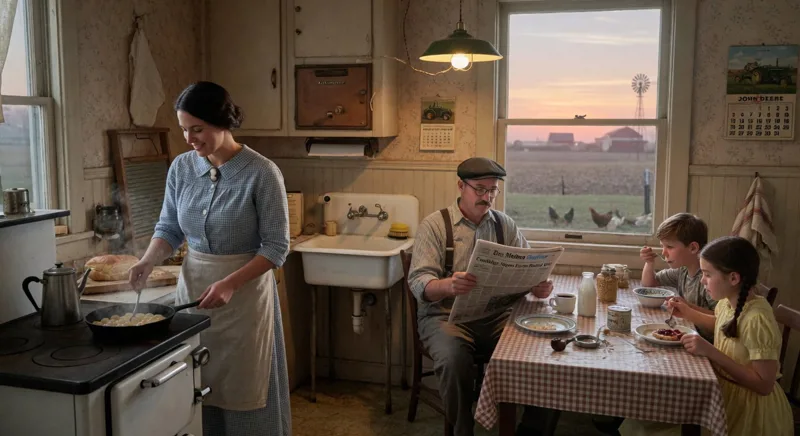
What everyday life looked like 100 years ago depended heavily on location, income, race, gender, and access to modern technology. In the United States of the mid-1920s, daily routines were becoming more modern, but many homes still relied on coal, kerosene, manual labor, and local communities.
A Typical Day in the 1920s
Imagine waking before sunrise in a home with limited heating, no internet, and possibly no indoor plumbing. Breakfast might include eggs, oatmeal, bread, coffee, or milk. Afterward, family members separated for work, school, farm chores, or household responsibilities.
Life moved at a slower pace, but it was not necessarily easier. Many ordinary tasks required physical effort. Washing clothes, preparing meals, preserving food, carrying water, and heating the home could consume several hours each week.
Homes and Household Technology
Electricity was spreading quickly, although it had not reached every household. In 1920, approximately 35% of American homes had electricity; by 1930, that figure had risen to about 68%.[2] Rural families often waited much longer for electric service than people living in cities.
Household conveniences were also becoming more common:
- Electric lights began replacing candles, oil lamps, and gas lighting.
- Vacuum cleaners reduced some of the work involved in cleaning.
- Washing machines gradually replaced hand washing and washboards.
- Iceboxes were common, while electric refrigerators remained less affordable.
- Indoor plumbing was improving but was far from universal.
Even families with access to electricity might still heat their homes with coal or wood. Cooking often took place on a wood-burning, coal-burning, or early gas stove. A modern kitchen with reliable appliances was still a sign of prosperity.
Transportation Before Modern Travel
Cars were transforming everyday life. By the end of the 1920s, roughly half of American families owned an automobile, and more than 23 million cars had been registered by 1929.[1][2] However, driving was not always convenient.
Many roads were unpaved, poorly marked, or vulnerable to bad weather. Long-distance travel could take days or weeks. Trains remained essential for intercity journeys, while streetcars and horse-drawn vehicles continued operating in many communities.
For nearby errands, people commonly walked, rode bicycles, used streetcars, or depended on local buses. A trip to the grocery store was usually more frequent because homes had limited refrigeration and food storage.
Work and Family Responsibilities
The standard workweek was generally longer than it is for many workers today. In 1926, a 40-hour, five-day workweek was still considered unusual; many employees worked at least 48 hours weekly.[3]
Factories, offices, mines, railroads, farms, shops, and domestic service provided much of the employment. Workplace safety standards were limited, and child labor still existed in some industries and agricultural communities.
Women increasingly worked outside the home as secretaries, sales clerks, teachers, nurses, and factory employees, although most married women were still expected to manage the household. Household labor included cooking from basic ingredients, sewing and mending clothing, cleaning, childcare, and food preservation.
Economic circumstances shaped daily life enormously. Wealthier families could hire domestic help, purchase automobiles, and enjoy early electrical appliances. Working-class and rural families often performed more tasks by hand and shared equipment with relatives or neighbors.
Communication and Entertainment
Radio was one of the most exciting new technologies of the decade. Families gathered around radio sets for music, news, sports, comedy, and serialized programs. Radio ownership expanded from only about 60,000 families in 1922 to nearly 14 million by 1930.[2]
Telephones were increasingly available in cities, but many households still did not have one. People relied on letters, newspapers, telegrams, and face-to-face visits to stay connected.
Entertainment often took place outside the home. Popular activities included:
- Going to the cinema for silent films and, later, early talking pictures.
- Listening to phonograph records.
- Attending dances featuring jazz and popular orchestras.
- Watching sporting events and visiting amusement parks.
- Reading newspapers, magazines, and affordable popular novels.
The 1920s were sometimes called the “Roaring Twenties,” but the glamorous image mainly reflected urban popular culture. Rural life, poverty, racial discrimination, and social inequality remained serious realities.
Food, Shopping, and Health
Most families bought food from local markets, neighborhood stores, butcher shops, bakeries, and general stores. Supermarkets had not yet become the standard. Seasonal eating was common, and families often canned fruits and vegetables for winter.
Processed foods and branded products were becoming more popular as mass production and distribution improved. Advertising encouraged consumers to purchase breakfast cereals, packaged foods, cleaning products, and new household appliances.
Healthcare was also different. Antibiotics, modern emergency medicine, and many routine vaccinations were not yet available. Families often relied on home remedies, local doctors, midwives, and community hospitals. A serious infection or childbirth complication could be far more dangerous than it is today.
School and Childhood
Children commonly walked to school, sometimes over long distances. Classrooms often contained students of several ages, particularly in rural areas. Lessons emphasized reading, writing, arithmetic, history, discipline, and practical skills.
After school, children played outdoors with neighbors, made up games, read books, or helped with household and farm work. Toys were usually simpler than today’s electronic devices, including dolls, wooden toys, marbles, balls, board games, and homemade creations.
How the 1920s Compare With Modern Life
| Area of life | About 100 years ago | Today |
|---|---|---|
| Communication | Letters, newspapers, telephones, and radio | Instant messaging, video calls, and social media |
| Shopping | Local shops and markets | Supermarkets, delivery services, and online stores |
| Housework | Mostly manual labor | Automated appliances and ready-made products |
| Travel | Walking, trains, streetcars, and early automobiles | Private cars, highways, air travel, and public transit |
Final Perspective
What everyday life looked like 100 years ago was a mixture of tradition and rapid change. Families still depended on physical work and local communities, yet electricity, automobiles, radio, movies, and consumer products were beginning to reshape daily routines.
The biggest difference was not simply the absence of smartphones or modern appliances. It was the amount of time people spent producing, repairing, carrying, preserving, and preparing the necessities of life. The 1920s marked the beginning of a modern lifestyle, but that transformation was uneven—and far from complete.
You May Also Like
 Entertainment
The Ultimate Test of Your 2000s Pop Culture Memory
 Entertainment
Which Cozy Weekend Plan Matches Your Personality?
 Entertainment
Can You Identify These Movies From One Object?