What People Get Wrong About Keeping Pet Birds
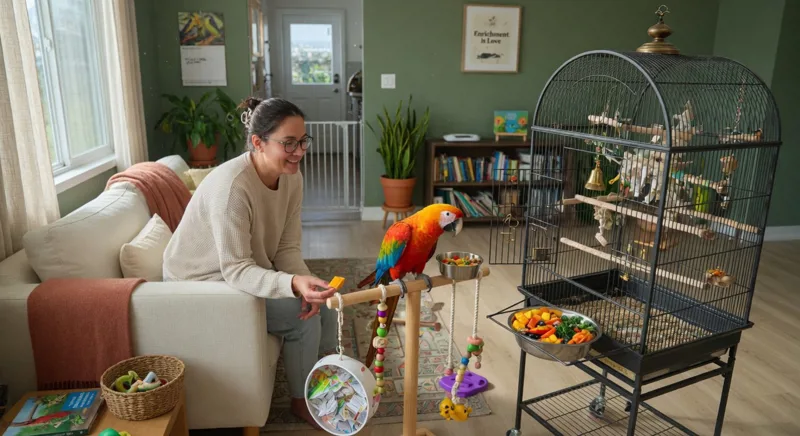
What people get wrong about keeping pet birds often begins with one simple idea: that birds are easy, low-maintenance pets. In reality, companion birds are intelligent, social animals with complex needs involving nutrition, enrichment, safe housing, exercise, and specialized veterinary care.
Myth 1: Pet birds are easy to care for
A small cage, a seed mix, and occasional attention are not enough to support a healthy life. Birds need daily care, routine cleaning, mental stimulation, and opportunities to move naturally.
Care requirements vary widely between species. A budgie, cockatiel, lovebird, African grey parrot, and macaw differ in size, noise level, lifespan, diet, behavior, and space requirements. Before choosing a bird, prospective owners should research the specific species rather than relying on general assumptions.
Daily responsibilities may include:
- Providing fresh food and clean water
- Removing spoiled food and soiled cage liner
- Offering exercise and supervised out-of-cage time
- Rotating safe toys and foraging activities
- Observing behavior, appetite, droppings, and activity levels
- Maintaining a safe, sanitary environment
Myth 2: A bird only needs a cage
A cage is a home base, not a complete lifestyle. Birds need enough room to climb, stretch, play, and, where safely possible, fly. A cage should be as spacious as the household can reasonably accommodate, with suitable bar spacing, nontoxic materials, secure doors, and properly sized perches.
Because many cages restrict flight, birds benefit from supervised exercise outside the enclosure. Windows, mirrors, ceiling fans, open doors, other pets, electrical cords, and hot cooking surfaces must be secured before a bird is allowed to explore.
Placement matters, too. The cage should be near family activity without being exposed to kitchen fumes, cigarette smoke, aerosol sprays, drafts, or excessive noise. Birds are sensitive to airborne toxins, and certain fumes can cause serious illness very quickly.
Myth 3: Seeds are a complete bird diet
One of the most persistent misconceptions about keeping pet birds is that a seed-only diet is natural and healthy. Seeds can be high in fat and may not provide the balanced vitamins and minerals a companion bird needs.
Many avian-care professionals recommend a species-appropriate formulated diet supplemented with carefully selected vegetables, fruits, and other fresh foods. Seeds and nuts are often better used as treats or rewards rather than as the main source of nutrition. Any diet change should happen gradually, because sudden changes may cause a bird to stop eating.
Fresh water should be available at all times and changed regularly. Food and water dishes also require frequent cleaning to prevent bacterial growth and spoilage.
Myth 4: Birds do not need much attention
Most companion birds are flock-oriented and highly social. They may bond closely with people, another bird, or both. Long periods of isolation can contribute to boredom, stress, excessive screaming, feather damaging, and other behavioral problems.
Companionship does not mean constant handling. A bird may enjoy talking, training, music, supervised exploration, and simply sharing space with its household. However, social needs differ by species and individual temperament. Some birds are affectionate, while others prefer interaction on their own terms.
Enrichment is more than buying toys
Bird enrichment should encourage natural behaviors such as chewing, climbing, shredding, searching, and problem-solving. Rotate toys instead of filling the cage with too many items at once, and introduce foraging activities that encourage the bird to work safely for part of its food.
Inspect toys frequently for loose parts, frayed fibers, toxic materials, and openings that could trap toes or beaks. A toy is only useful if it is safe for the bird’s size and behavior.
Myth 5: Birds are quiet pets
Bird vocalization is normal communication, not automatically a behavior problem. Even small birds can be surprisingly loud, particularly in the morning, at dusk, during hormonal periods, or when seeking attention.
Noise levels should be considered before bringing a bird home. Apartment living, thin walls, remote work, young children, and neighbors may all affect whether a particular species is a practical choice. Punishing a bird for vocalizing can increase fear and stress; identifying the trigger and improving routine, enrichment, and sleep is usually more helpful.
Myth 6: Birds do not need regular veterinary care
Birds often hide signs of illness because appearing weak can make them vulnerable in the wild. By the time symptoms become obvious, a health problem may already be advanced.
A new bird should receive an examination from an avian veterinarian soon after coming home. Routine wellness visits, commonly recommended at least annually, can help detect weight changes, nutritional deficiencies, respiratory problems, infections, and other concerns early. A new bird may also need quarantine away from existing birds until a veterinarian advises that contact is safe.
Find veterinary care before an emergency occurs. Avian specialists may be less common than general veterinary clinics, so location and availability should be part of the ownership decision. Veterinary examinations, diagnostic testing, emergency treatment, cage equipment, specialized diets, and ongoing care can all add to the long-term cost of keeping a bird.
Myth 7: Small birds are short-term commitments
Birds can live much longer than many first-time owners expect. Some parrots may remain part of a family for decades, while even smaller species require a meaningful long-term commitment. Owners should plan for changes in housing, travel, finances, relationships, and access to veterinary care.
The real cost of keeping a pet bird includes more than the purchase or adoption fee. It may involve:
- A safe, appropriately sized cage or aviary
- Perches, toys, food, and enrichment supplies
- Regular cage cleaning and replacement equipment
- Avian veterinary examinations and emergency care
- Specialized boarding or pet-sitting arrangements
- Species-appropriate nutrition and household safety modifications
The better way to think about pet bird ownership
Keeping a pet bird is not about creating a decorative cage display. It is about providing a safe environment that supports the animal’s physical health, social life, natural behaviors, and emotional well-being.
Choose a species based on its needs rather than appearance. Prepare the home before arrival, establish an avian veterinary relationship, provide a balanced diet, and build enrichment into every day. When these needs are taken seriously, birds can be engaging, funny, intelligent companions—but they are not effortless pets.
You May Also Like
 Entertainment
The Ultimate Test of Your 2000s Pop Culture Memory
 Entertainment
Which Cozy Weekend Plan Matches Your Personality?
 Entertainment
Can You Identify These Movies From One Object?