A Room-by-Room Guide to Making Your Apartment More Cat-Friendly
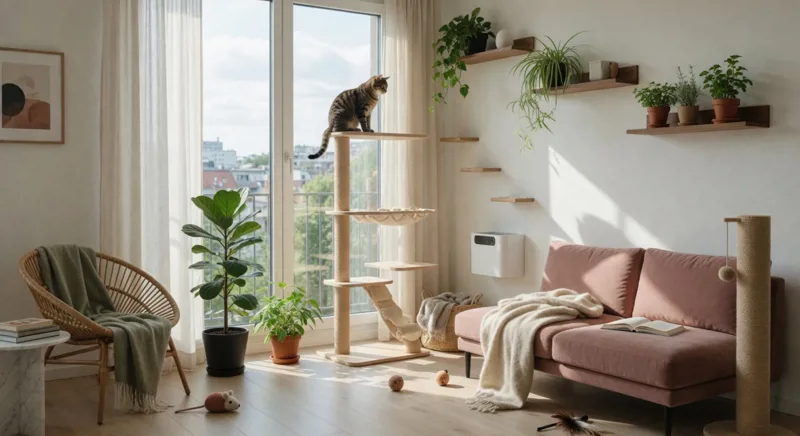
Making your apartment more cat-friendly does not require a complete renovation. With thoughtful layout changes, safe vertical space, enriching activities, and comfortable resting areas, every room can support your cat’s natural instincts while keeping your home tidy and calm.
Start With the Entryway: Create a Safe Arrival Zone
The entryway is often overlooked, but it is one of the most important areas for apartment cat safety. Doors open frequently, and a curious cat can slip into a hallway or stairwell in seconds.
- Keep your cat away from the door during deliveries and busy arrivals.
- Store bags, shoes, and coats where they cannot contain harmful chemicals, pills, or small objects.
- Use a baby gate or interior door to create a temporary buffer when necessary.
- Keep identification and carrier supplies easy to reach for emergencies or veterinary visits.
If you are moving into a new apartment, begin with one quiet room before giving your cat access to the entire home. This can reduce stress and help your pet settle gradually.
Living Room: Combine Comfort, Play, and Vertical Space
Your living room can become the main enrichment area in a cat-friendly apartment. Cats benefit from opportunities to climb, observe, hide, scratch, and play. Indoor-only cats especially need stimulating environments that support exercise and natural hunting behaviors.[1]
Add Height Without Losing Floor Space
Cat trees, wall-mounted shelves, and sturdy bookcases can provide valuable vertical territory. Place a perch near a secure window so your cat can watch birds, people, or outdoor activity. Make sure every shelf is firmly anchored and has enough depth for safe footing.
Offer Several Resting Choices
Some cats prefer enclosed beds, while others want an open cushion in a sunny location. Provide a mixture of options:
- A covered hideaway for privacy
- A soft bed or blanket for sleeping
- A raised perch for observing the room
- A cardboard box or paper bag for low-cost exploration
Rotate toys instead of leaving every toy out at once. Wand toys, puzzle feeders, treat balls, and small fabric toys can keep playtime interesting. Always supervise toys with strings, feathers, or loose parts.
Make Scratching Easy and Appealing
Place scratching posts near sleeping areas, furniture, and entry points. Cats often stretch and scratch after waking, so a tall, stable post beside the sofa may be more effective than one hidden in a corner. Offer both vertical and horizontal scratchers when possible.
Kitchen and Dining Area: Protect Food, Appliances, and Curious Paws
Kitchens contain many hazards, including hot surfaces, sharp utensils, cleaning products, and foods that are unsafe for cats. Store medications, detergents, and chemicals inside secured cabinets. Keep countertops clear while cooking, and never leave a hot stovetop unattended.
- Use childproof latches on low cabinets.
- Secure trash cans with tight-fitting lids.
- Keep electrical cords away from chewing cats.
- Check that appliances, especially ovens and washing machines, are closed before use.
- Do not leave toxic foods, such as onions, garlic, chocolate, or grapes, within reach.
Place food and water in a quiet location away from the litter box. Cats generally do better when essential resources are separated rather than crowded together.[2] A wide, shallow bowl or pet fountain may also help cats that dislike their whiskers touching the sides.
Bedroom: Build a Calm Retreat
The bedroom can serve as a dependable safe haven, particularly for shy cats or pets adjusting to apartment life. Leave space beneath the bed or add a covered cat bed where your cat can retreat undisturbed.
Keep blind cords, charging cables, jewelry, hair ties, and small items out of reach. Secure tall lamps, mirrors, and unstable furniture so they cannot topple during climbing or energetic play.
If your cat wakes you at night, schedule an interactive play session before bedtime and offer a small portion of food afterward. This routine can help channel evening energy in a predictable way.
Bathroom and Laundry Area: Focus on Cat-Proofing
Bathrooms and laundry rooms are compact but hazard-rich spaces. Keep toilet lids closed, particularly if you have a kitten. Store razors, cosmetics, medication, and cleaning products in closed cabinets.
- Keep washer and dryer doors shut when not in use.
- Check inside machines before loading laundry.
- Secure dangling cords and blind strings.
- Prevent access to bleach, detergents, and fabric softeners.
- Close narrow gaps behind appliances where a cat could become trapped.
For apartments with limited space, the laundry area may be a practical location for one litter box, provided it is quiet, accessible, and separated from food and water.
Choosing the Best Litter Box Location
Litter box placement can make or break apartment living. Put boxes in accessible areas with low foot traffic and an easy escape route. Avoid placing one beside loud appliances or in a closet that can accidentally be closed.
The commonly recommended formula is one litter box per cat, plus one extra. In a small apartment, distribute them across separate areas rather than lining them up together.[4] Scoop frequently, wash boxes with unscented products, and choose a box large enough for your cat to turn around comfortably.
Windows, Balcony, and Outdoor Views
Secure window screens before allowing your cat near open windows. Screens designed only to keep insects out may not withstand a cat’s weight or pushing. Never assume a high-rise window is safe simply because it is difficult to reach.
If your apartment has a balcony, use a professionally secure enclosure or keep the door closed. A catio-style setup can provide outdoor stimulation, but improvised netting may fail under pressure or weather exposure.
Remove toxic houseplants and avoid leaving small decorative objects where they can be knocked over. These simple changes reduce poisoning, falls, and emergency hazards.[3]
A Simple Apartment Cat-Friendly Checklist
- Provide vertical space and multiple resting spots.
- Keep food, water, litter, scratching, and sleeping areas separate.
- Offer daily interactive play and occasional food puzzles.
- Secure windows, cords, cabinets, and unstable furniture.
- Remove toxic plants and unsafe household chemicals.
- Give your cat quiet places to hide without forcing interaction.
- Rotate toys and enrichment items to maintain novelty.
Conclusion
A cat-friendly apartment is less about square footage and more about thoughtful design. By adapting each room with safe hiding places, vertical territory, clean toileting areas, scratching options, and engaging play, you can create a home that supports both feline wellbeing and everyday convenience. Start with the biggest safety risks, then add enrichment gradually—your cat will show you which improvements matter most.
You May Also Like
 Entertainment
The Ultimate Test of Your 2000s Pop Culture Memory
 Entertainment
Which Cozy Weekend Plan Matches Your Personality?
 Entertainment
Can You Identify These Movies From One Object?