9 Rainy-Day Games for Dogs Who Have Already Inspected Every Window
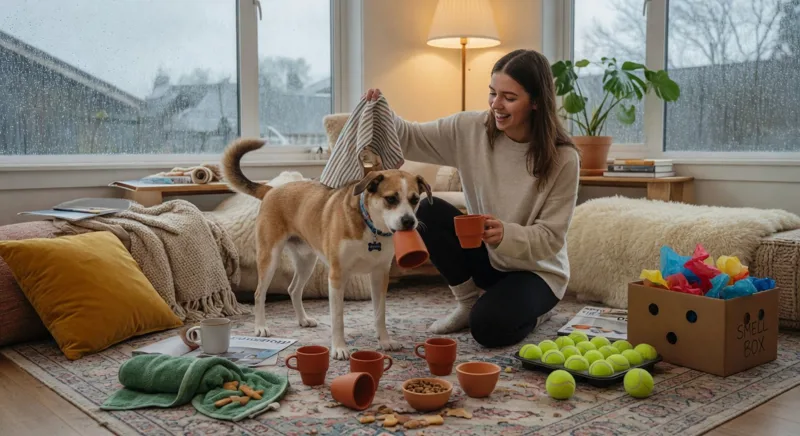
When the rain will not let up, even the most dedicated window inspector can run out of things to do. These nine rainy-day games for dogs provide mental stimulation, gentle exercise, and plenty of indoor enrichment—using simple supplies you probably already have.
Why Indoor Enrichment Matters on Rainy Days
Dogs need more than physical exercise. Sniffing, searching, chewing, learning, and problem-solving all engage natural behaviors and can help reduce boredom. Food puzzles, scent games, and short training sessions can be especially useful when outdoor walks are limited.
Before starting, clear slippery floors, move fragile objects, and choose games that suit your dog’s age, size, energy level, and mobility. Always supervise homemade enrichment items and remove anything your dog tries to chew or swallow.
1. The “Find It” Treat Hunt
Turn your living room into a simple indoor treasure hunt. Begin by placing a treat where your dog can easily see it. Say “find it,” then celebrate when your dog discovers the reward.
Once your dog understands the game, hide small pieces of kibble or treats behind furniture legs, beside a dog bed, or under the edge of a towel. Start with easy hiding places, then gradually make the search more challenging.
This scent game is a low-impact way to provide mental stimulation. Use part of your dog’s regular meal rather than adding too many extra calories.
2. Muffin-Tin Puzzle Game
For an easy DIY dog puzzle, place a few pieces of kibble in the cups of a muffin tin. Cover some or all of the cups with sturdy tennis balls or appropriately sized dog toys. Your dog must move the covers to reach the food.
Keep the first round simple so your dog learns the idea. If your dog becomes frustrated, uncover a few cups or leave some treats visible. Supervise closely, especially if your dog likes to chew rubber or fabric objects.
3. Rolled-Towel Treat Puzzle
Lay a towel flat and scatter kibble across it. Roll the towel loosely, then let your dog sniff, nudge, and unroll it to find the food.
For experienced dogs, fold the towel into sections before rolling it. Use a washable towel and avoid this activity if your dog is likely to eat fabric. The goal is foraging—not shredding.
4. Cardboard Box Treasure Hunt
Place a treat inside a clean, empty cardboard box and leave the top open. Encourage your dog to investigate. When your dog understands the game, nest a smaller box inside a larger one or add crumpled paper around the treat.
Cardboard enrichment works well because it combines sniffing, pawing, and problem-solving. Remove the box when the treats are gone and discard it if your dog begins swallowing pieces.
5. Indoor Obstacle Course
Build a gentle obstacle course with cushions, chairs, blankets, and sturdy household items. Ask your dog to weave around chair legs, walk over a rolled blanket, or crawl beneath a safely positioned table.
Keep jumps low—or skip them entirely for puppies, senior dogs, large breeds, and dogs with joint problems. Reward calm movement with praise, a toy, or a few pieces of kibble. Avoid slippery floors and sharp corners.
6. Hallway Fetch With a Soft Toy
A short hallway can become a controlled indoor fetch lane. Choose a soft toy, remove breakable objects, and toss it only a short distance. Use gentle throws rather than launching the toy toward walls or furniture.
If your dog tends to skid, place runners or nonslip mats along the route. Stop if your dog seems tired, overheated, or overly frantic. Several brief rounds are safer and more engaging than one exhausting session.
7. Tug, Trade, and Release
Tug-of-war can provide exercise and reinforce useful manners. Use a sturdy dog tug toy, invite your dog to play, and periodically pause to practice “drop it” or “trade.” Reward the release, then resume the game.
Keep the toy below shoulder height and avoid sudden twisting or forceful pulling. A well-managed tug session can be particularly helpful for energetic dogs who need an outlet but cannot get a long walk.
8. The Cup-and-Treat Guessing Game
Place three sturdy cups upside down on the floor. Let your dog watch as you hide a treat beneath one cup, then encourage your dog to choose.
At first, keep the cups still and make the correct answer obvious. Later, move them slowly or add a second treat. Use cups large enough that your dog cannot fit one entirely in its mouth, and supervise throughout the game.
9. Trick-Training Bingo
Turn basic obedience into a rainy-day challenge. Practice cues such as sit, down, touch, wait, spin, place, and come. You can create a simple list and check off three or four skills during a short session.
Keep training upbeat and brief, ending while your dog is still interested. Reward with tiny treats, praise, or access to a favorite toy. Mental work can leave dogs pleasantly tired without requiring much space.
Rainy-Day Dog Game Safety Tips
- Supervise homemade puzzles, cardboard games, and toys with removable parts.
- Choose toys that are too large to swallow and appropriate for your dog’s chewing style.
- Inspect toys for cracks, torn fabric, loose pieces, or damaged rubber before play.
- Use your dog’s normal food allowance for treat-based games when possible.
- Stop play if your dog shows stress, frustration, pain, or excessive fatigue.
- Rotate activities so the same puzzle does not become predictable.
Make the Next Rainy Day More Fun
The best indoor dog games do not need to be expensive or complicated. A towel, muffin tin, cardboard box, or a few household cushions can create a rewarding enrichment routine. Mix scent work, gentle movement, puzzle toys, and trick training, and your dog may finish the day happily tired—even after every window has been inspected.
References
You May Also Like
 Entertainment
The Ultimate Test of Your 2000s Pop Culture Memory
 Entertainment
Which Cozy Weekend Plan Matches Your Personality?
 Entertainment
Can You Identify These Movies From One Object?