Pop Culture Moments That Became Universal Reaction GIFs
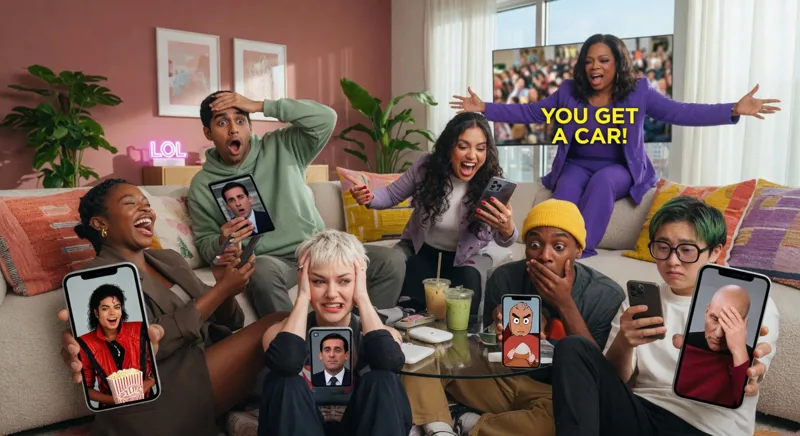
Some pop culture moments live far beyond their original shows, movies, or videos. They become universal reaction GIFs—tiny looping clips that help people express disbelief, joy, awkwardness, frustration, and chaos without typing a single word.
Why Pop Culture Moments Become Reaction GIFs
A great reaction GIF captures an emotion instantly. The best examples feature a clear facial expression, dramatic body language, or a perfectly timed change in mood. Context helps, but it is not essential. Even someone who has never watched the original show can understand what the GIF means.
Reaction GIFs also solve a common problem in digital communication: text can feel flat. A short animated clip adds tone, timing, and personality to group chats, social media posts, workplace messages, and online conversations.
The most reusable GIFs usually communicate one of these familiar responses:
- Confusion or disbelief
- Embarrassment and secondhand awkwardness
- Excitement and celebration
- Frustration or disappointment
- Suspicion and skepticism
- Watching drama unfold
Iconic Pop Culture Moments That Became Universal Reaction GIFs
Michael Jackson Eating Popcorn
The famous “popcorn.gif” comes from Michael Jackson’s Thriller video. In the clip, Jackson watches with wide-eyed interest while eating popcorn, creating the perfect visual shorthand for observing drama from a safe distance.[1]
Today, the GIF is commonly used when someone wants to say, “This situation is entertaining, and I am watching every second.” It works especially well during online arguments, celebrity news, sports debates, and unexpected plot twists.
Michael Scott’s “No, God!” Reaction
Steve Carell’s Michael Scott from The Office produced some of the internet’s most recognizable reaction GIFs. His panicked response to bad news—particularly the dramatic “No, God!” moment—communicates instant regret, horror, and emotional overload.[4]
The GIF remains popular because the reaction is bigger than the situation. It can represent a disastrous work email, a failed plan, an unexpected bill, or a minor inconvenience that suddenly feels catastrophic.
James Van Der Beek Crying
James Van Der Beek’s emotional expression as Dawson in Dawson’s Creek became one of the internet’s most recognizable crying GIFs. The scene originally appeared in the show’s third-season finale, but its dramatic tears eventually became a flexible response to disappointment and exaggerated sadness.[1]
Its appeal comes from the contrast between serious television drama and everyday online problems. Whether someone misses a delivery or loses an argument, Dawson’s tears turn ordinary frustration into melodrama.
Oprah’s “You Get a Car!” Moment
Oprah Winfrey’s enthusiastic reaction during a 2004 audience giveaway became a template for exaggerated generosity. The repeated “You get a car!” moment is now used whenever someone distributes gifts, opportunities, rewards, or unexpected benefits to everyone.[5]
This is more than a reaction GIF. It is a reusable internet format. Replace “car” with nearly anything—a bonus, a discount, a promotion, or a free meal—and the meaning remains immediately clear.
Tyra Banks Losing Her Patience
Tyra Banks’s intense confrontation on America’s Next Top Model created another enduring pop culture reaction. Her emotional delivery expresses disappointment, urgency, and the feeling that someone has failed to recognize an obvious opportunity.[2]
The GIF is often used when a friend makes a questionable decision or when someone needs encouragement delivered with maximum intensity. Its dramatic energy makes it particularly effective in group chats and social media comments.
The Blinking White Guy
The “blinking white guy” GIF features Drew Scanlon reacting with stunned surprise in a gaming video. The clip became widely recognizable because the slow blinking perfectly captures confusion, disbelief, and the need to process unexpected information.[2]
Unlike some highly theatrical reactions, this one feels understated. That makes it useful for awkward workplace messages, strange headlines, technical errors, and conversations that suddenly take an unexpected turn.
Arthur’s Clenched Fist
The image of Arthur clenching his fist comes from the children’s animated series Arthur. Although the original scene involves frustration, the still image became a universal symbol of contained anger and silent irritation.[6]
Its simplicity is the secret. No dialogue is needed, and the tightly closed fist can represent anything from a delayed train to an annoying notification.
Picard’s Facepalm
Captain Jean-Luc Picard’s facepalm from Star Trek: The Next Generation became a classic response to foolishness, disappointment, and preventable mistakes. The gesture is visually universal, which helps it work across languages and cultures.[3]
It is one of the clearest examples of a reaction GIF becoming a form of visual shorthand. A single movement communicates, “I cannot believe this is happening.”
What Makes a Reaction GIF Universally Relatable?
- Instant readability: The emotion is obvious within a second or two.
- Strong facial expression: Surprise, laughter, tears, and disbelief translate especially well.
- Short looping action: A repeated gesture makes the GIF easy to watch and reuse.
- Flexible meaning: The clip works in many different conversations.
- Cultural familiarity: Popular television, film, music, and viral videos give the moment a wide audience.
The Lasting Influence of Universal Reaction GIFs
Universal reaction GIFs have become part of online language. They bridge the gap between written communication and face-to-face expression, adding timing and emotional nuance to messages that might otherwise sound blunt or confusing.
More importantly, these GIFs show how audiences reshape pop culture. A scene created for a scripted story can be removed from its original context, reinterpreted, and given a new life as a shared digital expression.
Conclusion
Pop culture moments that became universal reaction GIFs succeed because they capture feelings almost everyone recognizes: shock, laughter, frustration, awkwardness, and curiosity. From Michael Jackson’s popcorn to Michael Scott’s panic, these short clips have evolved into a visual vocabulary for the internet—one expressive loop at a time.
References
You May Also Like
 Entertainment
The Ultimate Test of Your 2000s Pop Culture Memory
 Entertainment
Which Cozy Weekend Plan Matches Your Personality?
 Entertainment
Can You Identify These Movies From One Object?