Ordinary Objects With Surprisingly Clever Hidden Features
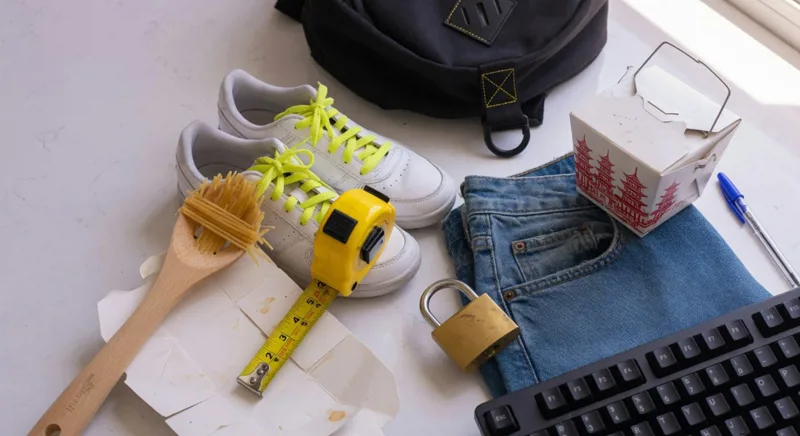
Everyday life is filled with small design decisions that solve problems quietly. From keyboard bumps to the loose end of a tape measure, these ordinary objects with surprisingly clever hidden features reveal how much thought goes into products we often overlook.
Why Everyday Objects Have Hidden Features
Good product design is rarely accidental. A tiny hole, ridge, flap, or extra stitch may improve safety, durability, comfort, measurement, or convenience. The best hidden functions feel so natural that you may use them for years without realizing what they do.
Some features come from engineering requirements, while others evolved from manufacturing methods or older traditions. Here are some of the most useful examples hiding in plain sight.
Household Items With Clever Design Details
The Hole in a Pasta Spoon
The central hole in many pasta spoons is commonly used to estimate a single serving of dry spaghetti. The opening is not a perfect measurement for every pasta shape or appetite, but it provides a practical portion guide without a scale.
This simple feature helps reduce guesswork when cooking and can make portion control easier. It is a good example of functional kitchen design disguised as decoration.
The Slot in a Pan Handle
Many frying pan handles include a narrow slot designed to hold a cooking utensil. Instead of placing a spatula or spoon directly on the counter, you can rest it in the opening while cooking.
The feature helps keep work surfaces cleaner and keeps the utensil close at hand. It also shows how manufacturers can add convenience without adding a separate kitchen accessory.
The Foldable Takeout Box
Traditional paper takeout containers can often be unfolded into a temporary plate. The folded construction keeps food contained during transport, but opening the creases creates a broader eating surface.
This design is especially useful when plates are unavailable. It also reduces the need for extra disposable tableware, although the container should only be unfolded if it is clean, stable, and intended for food contact.
The Small Opening in a Padlock
A small hole at the bottom of some padlocks serves as a drainage opening. If rain or condensation enters the lock, the hole allows water to escape instead of remaining inside and encouraging rust.
On certain models, the opening may also help with maintenance or lubrication. Its exact purpose varies by lock design, but it is generally an important part of weather resistance.
Hidden Safety Features in Everyday Products
The Hole in a Pen Cap
Many pen caps have a tiny opening at the top. While it may help with manufacturing or airflow, one major purpose is safety: it can allow limited airflow if the cap is accidentally swallowed.
This does not make a pen cap safe to chew or give to a child. It simply reflects an additional safety measure built into a familiar object.
Escalator Brush Strips
The brushes along escalator edges are not intended to clean shoes. Their bristles help draw attention to the boundary and encourage passengers to move away from the side panel, where clothing, shoelaces, or loose items could become trapped.
They are a subtle example of safety-focused design. The best safety features often guide behavior without requiring signs or instructions.
The Extra Holes in Sneaker Uppers
The additional holes near the top of many athletic shoes allow alternative lacing techniques. A runner can create a “heel lock” by threading the laces through those openings, helping reduce heel movement inside the shoe.
This can improve stability and reduce slipping, particularly during running or activities involving sudden changes in direction. The unused holes are not necessarily missing parts; they provide customization options.
Clothing and Personal Items That Work Harder Than They Look
The Tiny Jeans Pocket
The small pocket inside the front pocket of classic jeans was originally intended for a pocket watch. Although most people no longer use it for that purpose, it remains useful for coins, keys, earbuds, or other small objects.
The larger metal buttons on jeans are rivets. They reinforce high-stress points, especially around pockets, helping fabric withstand repeated pulling and heavy use.
The Diamond-Shaped Backpack Patch
The small diamond-shaped patch found on some backpacks is often called a lash tab or gear loop. Traditionally, it provided a place to thread cord or attach equipment such as hiking gear, shoes, or clothing.
On modern backpacks, it may be mainly decorative, but the design comes from a practical outdoor feature rather than a random logo detail.
The V-Shaped Stitch on Sweatshirts
The triangular or V-shaped piece of stitching at the neckline of some sweatshirts has both historical and functional roots. It can reinforce the collar, increase flexibility, and help absorb moisture around the neck.
Today, the detail is also a recognizable style element, but its original purpose was closely connected to comfort and durability.
Tools and Technology With Secret Functions
The Loose End of a Tape Measure
The metal hook on a tape measure is designed to move slightly. This is intentional and helps maintain accurate measurements from both inside and outside edges.
When measuring the outside of an object, the hook pulls outward. When measuring inside a space, it presses inward. The small movement compensates for the hook’s thickness, creating what is often called a true-zero measurement.
The Bumps on the F and J Keys
The raised marks on the F and J keys help users position their index fingers without looking down. Once the fingers are correctly placed, the remaining keys can be reached using standard touch-typing technique.
The bump on the number pad’s 5 key serves a similar purpose. These tiny tactile guides improve speed, accuracy, and accessibility.
The Ferrite Cylinder on a Cable
The thick cylinder near the end of some computer, monitor, or power cables is a ferrite bead. It helps reduce high-frequency electromagnetic interference that could affect nearby electronic equipment.
It may look like an unnecessary lump in the cable, but it supports cleaner electrical performance and helps limit unwanted signal noise.
How to Notice More Hidden Features
- Look for openings, grooves, ridges, and movable parts.
- Ask what problem the feature might solve: safety, storage, strength, measurement, or comfort.
- Check whether the detail appears on similar products, since repeated designs often serve a standard purpose.
- Read the manufacturer’s instructions before using an unfamiliar feature.
- Do not assume every internet “life hack” is officially recommended or safe.
Conclusion: Small Details, Smart Solutions
Ordinary objects with surprisingly clever hidden features show that useful design does not always attract attention. A pen cap can include a safety consideration, a shoe can offer adjustable support, and a tape measure can correct its own reference point.
Once you start looking closely, everyday products become easier to understand. The smallest details often reveal the most practical ideas—quiet solutions built into the objects we use every day.
References
You May Also Like
 Entertainment
The Ultimate Test of Your 2000s Pop Culture Memory
 Entertainment
Which Cozy Weekend Plan Matches Your Personality?
 Entertainment
Can You Identify These Movies From One Object?