Giant Great White Is The Latest Scarred Victim Of 2 Dangerous Orcas

If you're like plenty of others in the world, the idea of what lies beneath the surface of the sea is enough to both fascinate and terrify you. Sure, there could be more life and answers to the universe down there that we are yet to learn, but why are things so big, and why does everything want to eat us?
While great white sharks might be the things that keep so many people up at night, it turns out they might not be the creature we need to fear the most. Oh no, a great white shark is the latest scarred victim of two dangerous orcas, going to show just how dangerous so many sea creatures can be.
False Bay was once a shark hotspot until the orca attacks
South Africa has long been a hotspot for sharks, especially great white sharks. A lot of this is thanks to Seal Island, with the influx of seals proving to be a major feeding spot for great whites. However, that all began to change in 2017. Great white shark sightings were becoming more rare until they had almost completely abandoned the spot by 2019. Although scientists have concluded there could be a number of factors that have seen the sharks find elsewhere to feed, one of the biggest is a pair of dangerous orcas known as Port and Starboard. The problem? The brothers have been feasting on fatty shark livers.
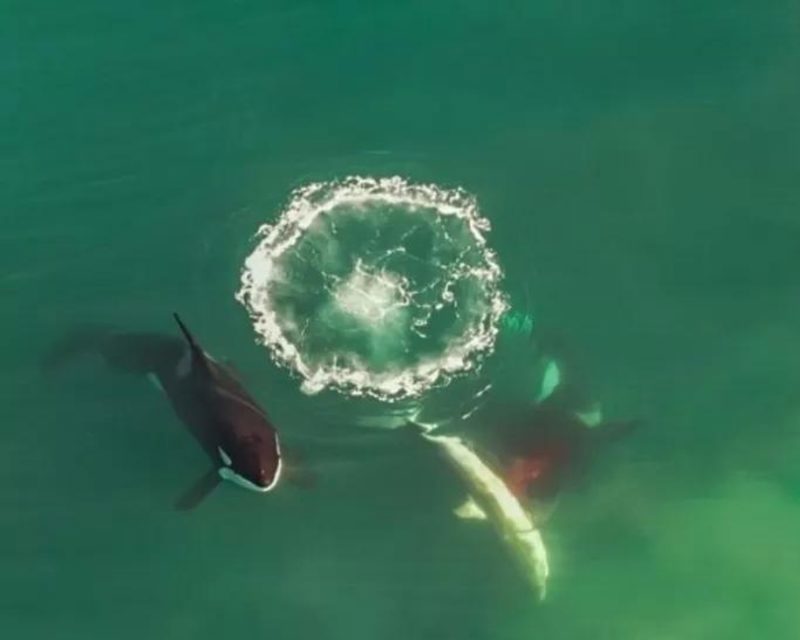
Recent aerial footage captured Port and Starboard attacking for the first time
For years, researchers only knew about the shark attacks thanks to the bodies washing up on shores. It wasn't until they tracked the dangerous orcas that they started to learn about their behavior, noting they were the same whales thanks to their prominent floppy dorsal fins that influenced their nicknames. However, things took a major turn at the end of 2022 when aerial footage captured their attack on film for the first time. Their behavior has never been seen in the wild before, especially as the footage proves how quickly the attacks take place.
Investigation into photos shows a giant great white shark who escaped
It wasn't until after the aerial footage emerged that the scientists started to take a closer look at photos of a giant great white shark from back in 2017. Alessandro De Maddalena is one of the many to investigate the scars seen on the shark, noting how unusual it is for orcas to even attack great whites. Alessandro adds the great white in the photo has a "wide trunk" and "massive body," which make the orca attacks even more terrifying. According to the former professor, the scars look like orca teeth marks that "were inflicted with significant force" and seemingly came from above.
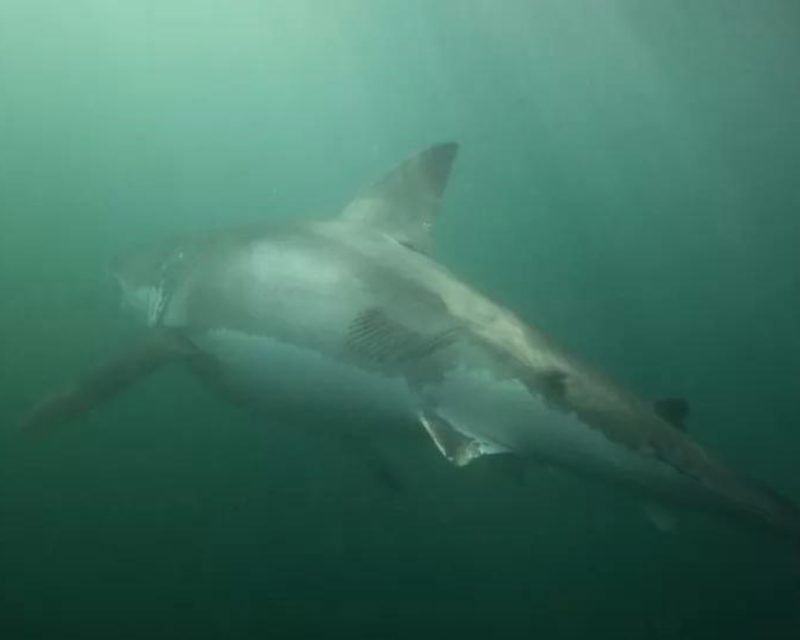
The timing of the great white attack is key to learning about the orcas
Just because the scars of the giant great white seem to prove the 11.4-foot-long beast escaped with their life doesn't mean every answer is clear. Alessandro De Maddalena added that sharks have incredible healing properties, meaning the injuries could have been inflicted weeks or days before the scars were captured on camera. However, the timing is everything. If the shark had been attacked years before, it helps to create a timeline of when Port and Starboard began their attacks, perhaps suggesting the reason the shark got away is that the dangerous orcas were still perfecting their hunting techniques.
The two dangerous orcas recently had their largest spree to date
To start, Port and Starboard were only attacking broadnose sevengill sharks around South Africa, but it wasn't long before the brothers upped the ante and began feasting on fatty great white shark livers. Now, the dangerous orcas have enjoyed their largest spree to date. In 2017, the orcas feasted on at least eight great whites, but that number was blown out of the water when the bodies of 19 broadnose sevengill sharks washed up on Pearly Beach, South Africa. For some, this proves the orcas are getting more dangerous and hints they might have fine-tuned their hunting style even more.
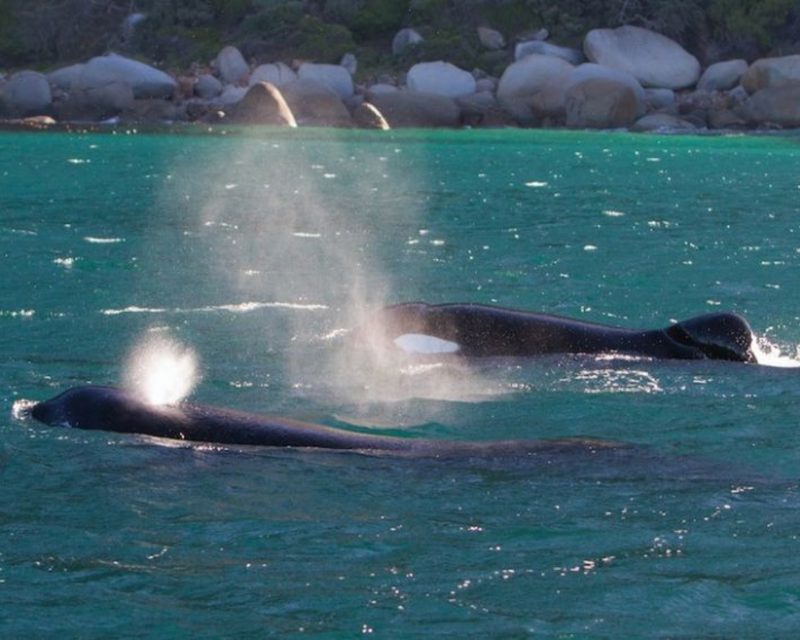
Attacking sharks could have big impacts on the local ecosystem
Port and Starboard are seemingly only a threat to sharks, but that doesn't mean their actions are entirely without consequences. Several researchers have spoken about great whites fleeing areas altogether in a bid to save themselves. This could, in turn, have some major effects on the local ecosystems as the biggest predators of the area are suddenly gone. This could lead to an influx of other species and see the entire food chain shift if the great whites remain gone for good.
A giant great white is the latest scarred victim of two dangerous orcas, but if Port and Starboard's latest spree is anything to go by, there's a good chance they are far from the last. The consequences? Only time will tell how dangerous their eating habits might become.
You May Also Like
 Entertainment
The Ultimate Test of Your 2000s Pop Culture Memory
 Entertainment
Which Cozy Weekend Plan Matches Your Personality?
 Entertainment
Can You Identify These Movies From One Object?