The Best Ways To Solve Common Behaviour Problems With Your Cats

Just like humans, cats have their own way of showing their emotions and unique quirks that make them so great. Still, the best ways to solve common behavior problems with your cats help when their mysterious natures get a little out of control.
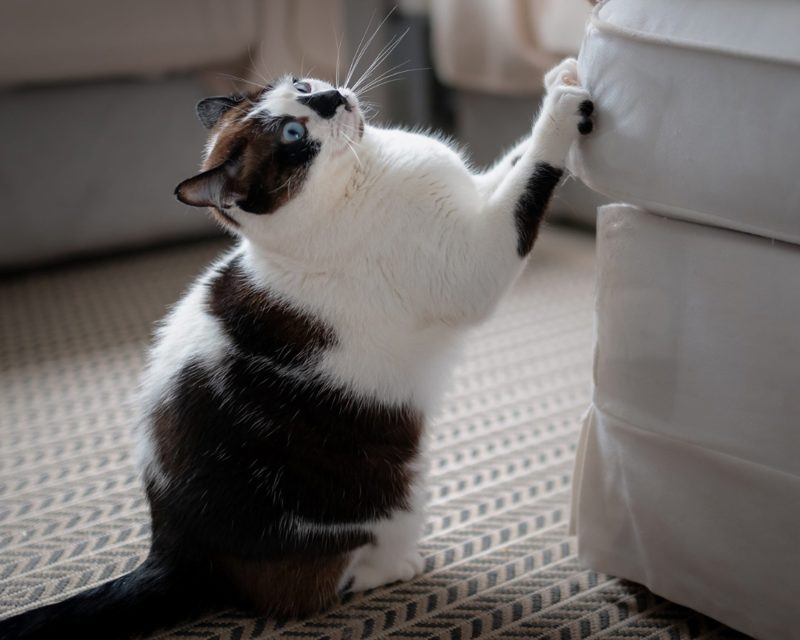
Redirect your cat’s need to scratch
It’s perhaps no surprise that cats love to scratch. However, if they’re scratching things like your furniture, you might need to redirect their attention. Never scold your cat for scratching or hold their paws and force them to scratch somewhere else. Instead, place posts where they like to scratch or covers over things you’d rather they leave alone. Cats scratch as a need and a way to mark their territory, so encouraging them to scratch where they’re supposed to should keep everyone happy.
Chewing can be a sign of several things
Cats aren’t known to be as bad for chewing as dogs, but they can still chew if they have a nutritional deficiency, were weaned too young, are teething, as a sign of aggression, or if they’re bored. There’s also a chance that cats chew simply because they like the feel of something in their mouths. Be sure that you’re feeding your cat a balanced diet, and talk to your vet if you’re worried about their diet or any dental concerns. Also, take a look at how they chew something to see if they’re showing aggression toward the object or if they’re chewing because they’re bored.
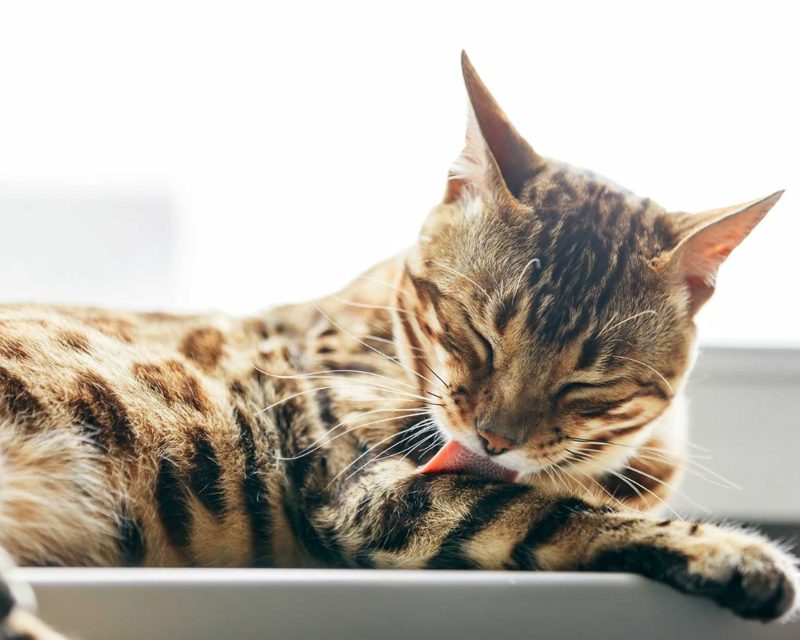
Obsessive-compulsive licking usually stems from stress or pain
Stress, anxiety, and pain are the most common reasons cats obsessively clean. While self-grooming is normal, licking until an area is bald and sore is not. Start by looking at your cat’s behavior to see if anything is causing stress or has changed that they don’t like. Cats are great at hiding when they are in pain, but there could be a sign that shows something is wrong. If not, it could be time to talk to the vet.
A vet might be needed for an aggressive cat
Cats aren’t naturally super aggressive, but anxiety and stress can trigger a mood change. Being in pain or hormonal changes can also add to the aggression. Plug-in pheromones could be enough to calm an unusually aggressive cat, but it might be worth seeking medical help if you’re worried something internally is wrong with your feline friend.

Excessive yowling usually means a cat wants something
Hearing a little cat meow can be enough to make many of us stop and coo – and that’s usually just what your cat wants. They use their voices to demand things from their owners, such as being let out, attention, or food. Sometimes, we need to figure out what they want and work around it, such as giving them a lot of attention or a meal before bed if they keep us up at night with their yowling.
The best ways to solve common behavior problems with your cats could be all we need to get our fluffy feline friend back on track.
You May Also Like
 Entertainment
The Ultimate Test of Your 2000s Pop Culture Memory
 Entertainment
Which Cozy Weekend Plan Matches Your Personality?
 Entertainment
Can You Identify These Movies From One Object?